PYTHON + AI / PYTHON
Python + AI: Where the Capabilities Expand
See how Python coordinates language, image, and audio models to build an AI filmmaking assistant.
 Vamshi KrishnaOctober 15, 2026 1 min read
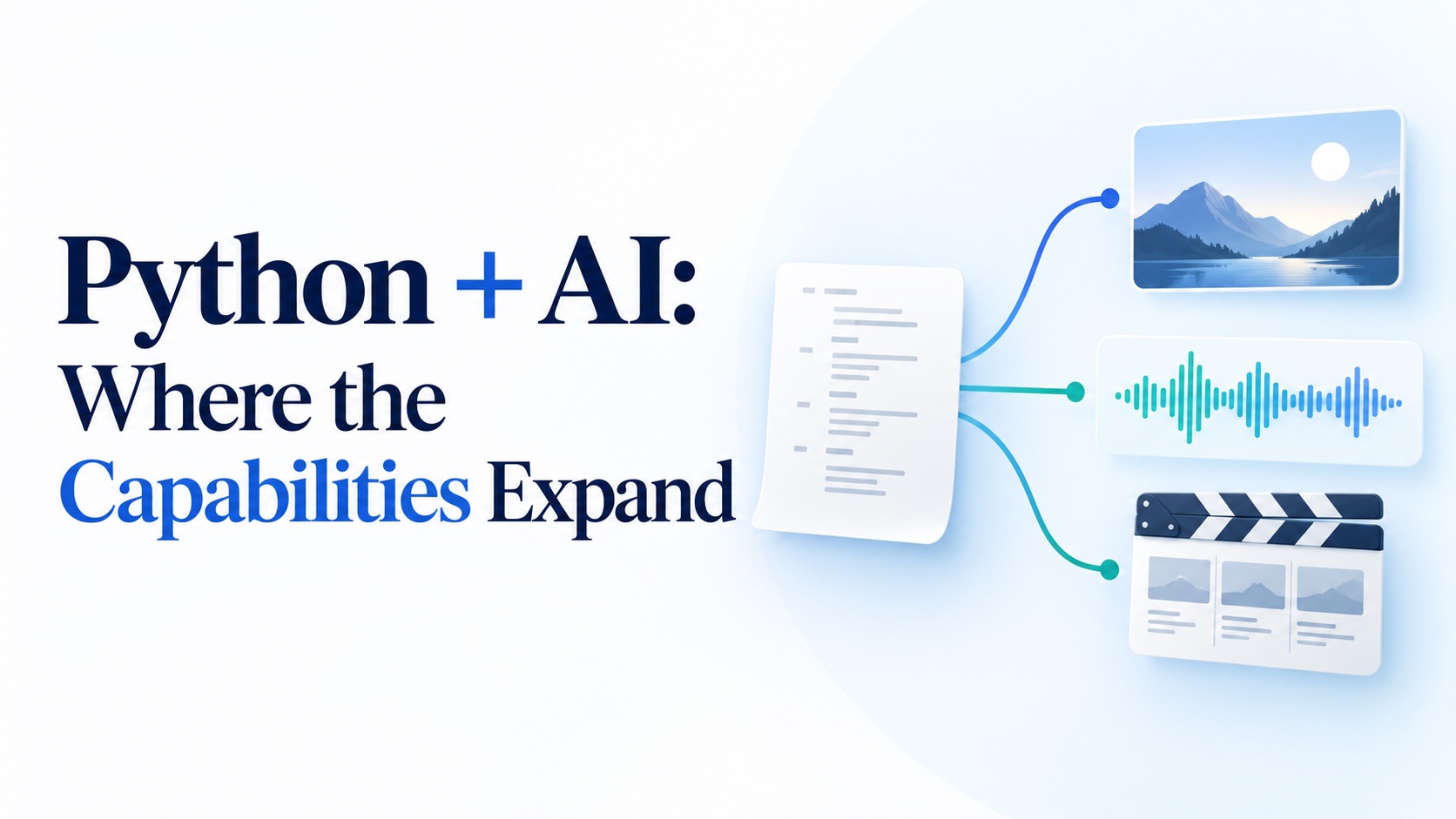
This is especially important for you. There is a difference between using an AI application and building your own AI-powered system.
Example: Build an AI filmmaking assistant
One application, multiple capabilities.
Input: Screenplay PDF
Python extracts text and organizes scenes and characters.
Reasoning: Language model
The model analyzes the story and proposes a shooting plan.
Visuals: Image model
Generate visual references for selected scenes.
Audio: Audio tools and models
Create temporary sound references or process dialogue recordings.
Output: Production package
Export scene breakdowns, budgets, reports, and downloadable files.
Python coordinates the workflow. Each specialized tool performs the task it is designed for.
Here are the three levels of AI capability to distinguish:
- Using an AI API: Your program sends a request to a hosted model and receives a response.
- Running an AI model locally: Your Python program loads or communicates with a model running on your own computer or server. Hardware requirements vary.
- Training or fine-tuning a model: You use data and machine-learning techniques to modify or develop model capabilities. This is generally more resource-intensive.
Python is widely used across all three, but it does not automatically provide the AI capability by itself.
NEXT IN THE SERIES
Keep building your understanding.
 Start here · 4 min readPython: The Engine Behind What You Can Build With AIRead next